9 reasons people are trading their cushioned shoes for the Relief Alpha
Most of them had already tried the gel insoles, the "orthopedic" pair and the memory foam. Here's what they found out about why none of it lasted.
Note: Read this BEFORE going through another shoe struggle

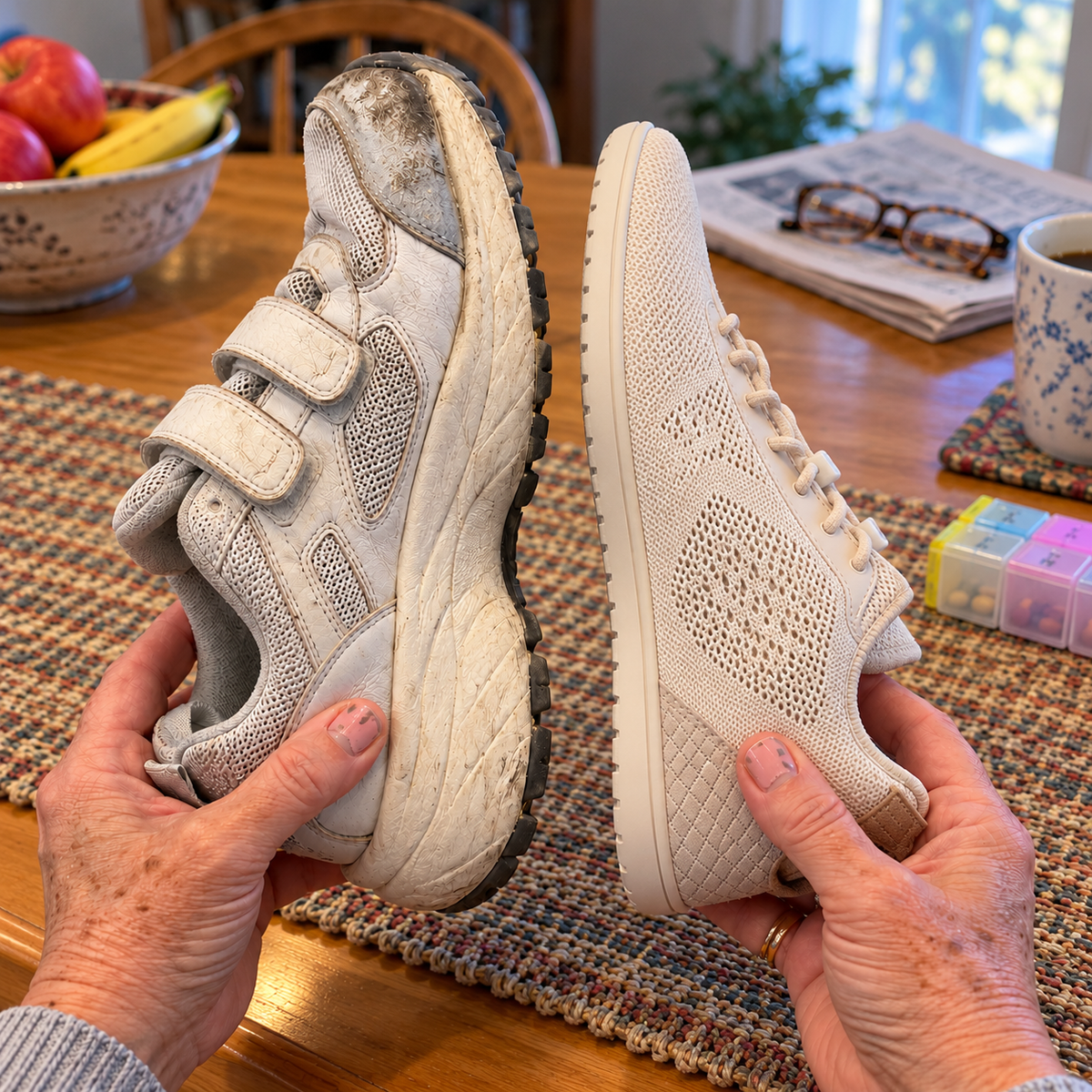
Most people have a closet that tells the same story.
The gel insoles. The "orthopedic" pair that cost well over $100. The memory-foam sneakers that felt like a cloud in the store and like a piece of wood by 3PM. The exact pair a sister or a neighbor swore by.
Every pair softer than the last. And somehow, every pair helped a little less.
If that sounds like your closet, it isn't your feet giving up. It's a pattern, and there's a fairly simple reason behind it (which we'll mention in #2). There's also a way out of it that doesn't ask you to do anything brave (that's #5).
Here's what people are noticing when they make the switch.
1. Your toes finally have somewhere to go
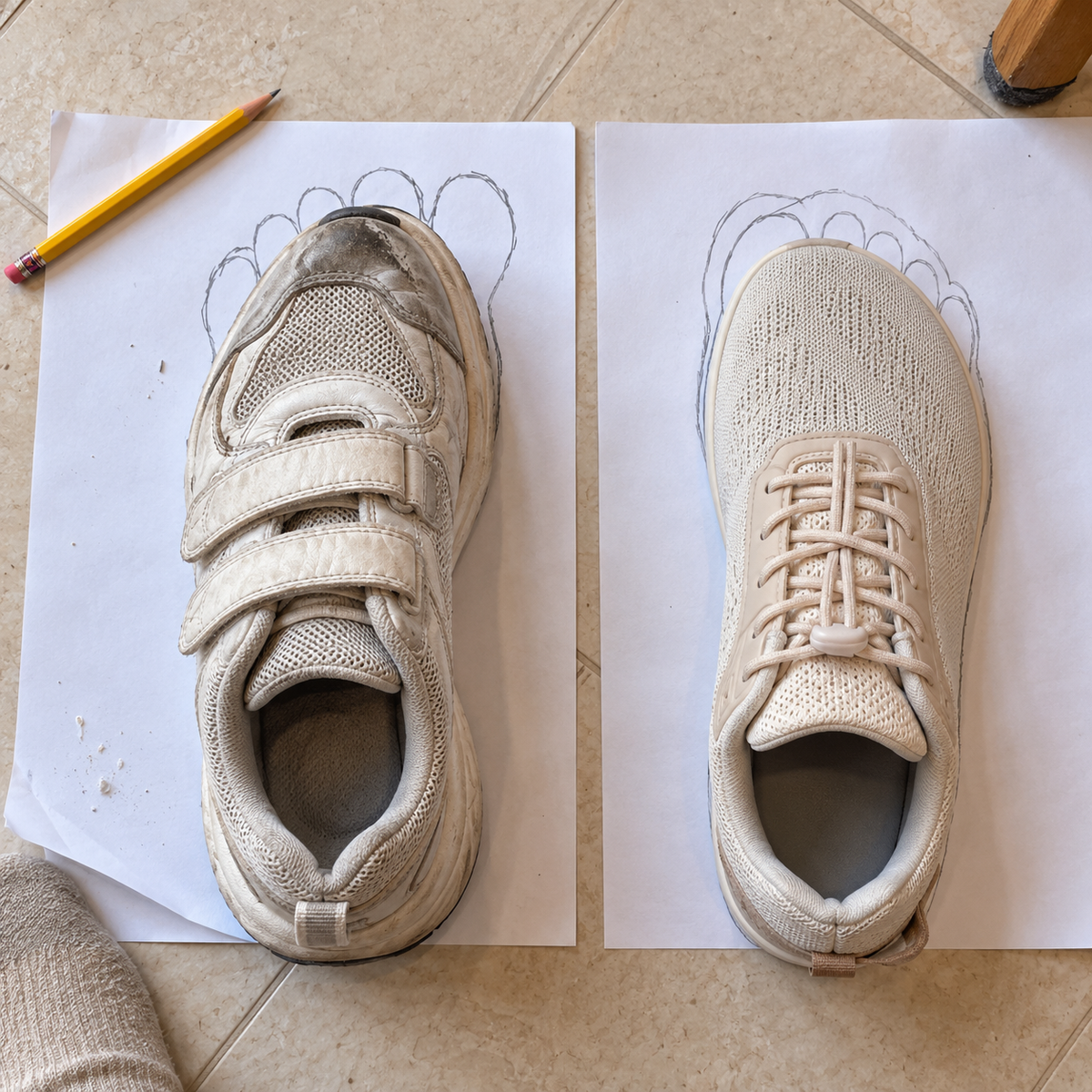
The first thing people mention is the front of the shoe.
Most shoes, "wide fit" ones included, are wide across the middle and narrow at the tip. Which is exactly where your toes are. By lunchtime that's the pinch on the side of the big toe and the heat across the ball of the foot.
The Relief Alpha is shaped like a foot instead of like a shoe. The toe box follows the outline of your toes, so they can spread out the way they do when you stand barefoot on a warm kitchen floor. The upper is a soft knit that gives over a bunion instead of pressing on it, and there are no seams inside to rub.
"My toes have room for the first time in years. My bunion doesn't scream at me on the downhills anymore."
2. It's built the opposite way to the shoes that let you down
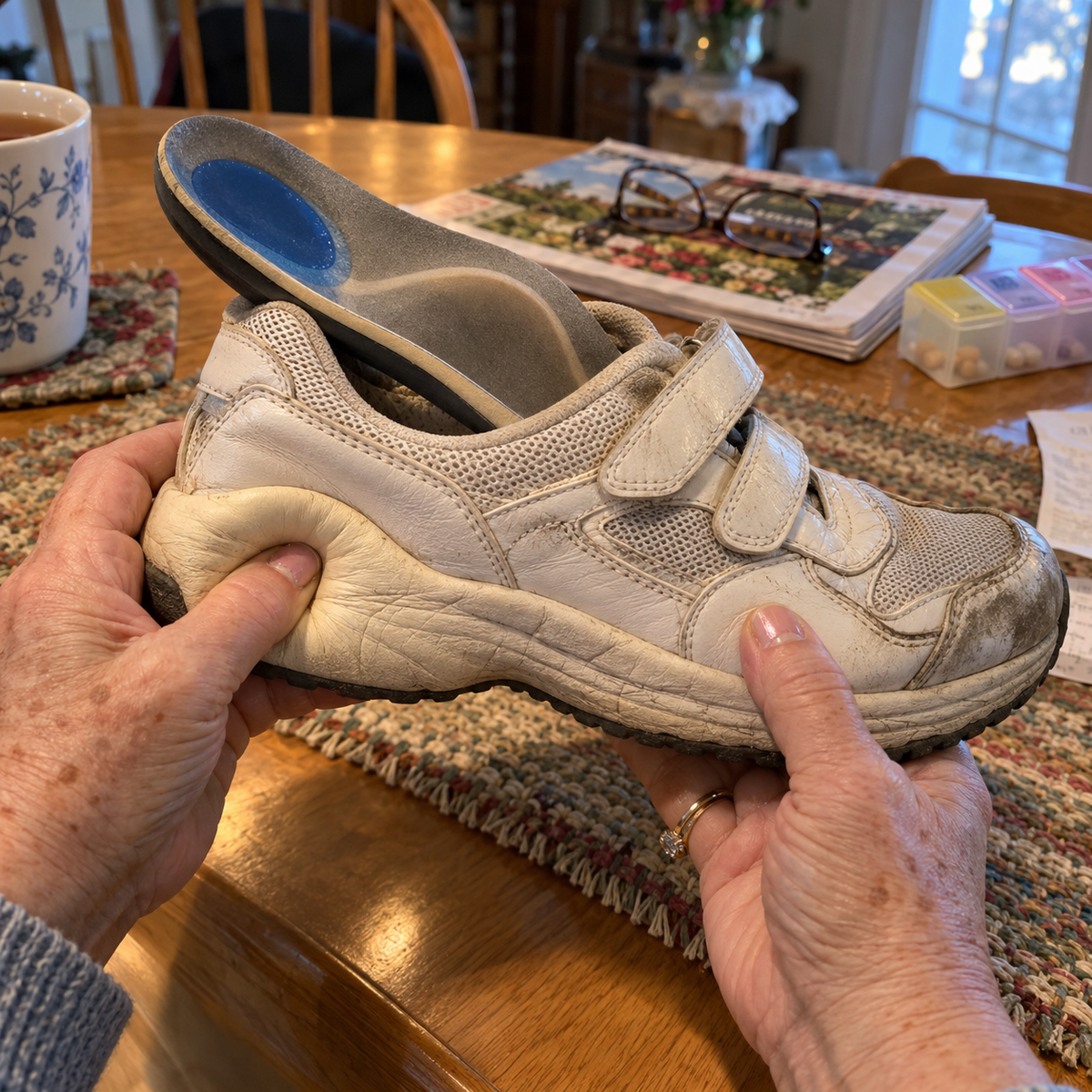
This is the part that surprises people.
Think about what a typical "supportive" shoe does all day. It holds your arch up, so the small muscles under it never have to. It's stiff enough that your toes never need to grip. And the foam is so soft the floor never really pushes back.
Your feet have over 100 muscles, tendons and ligaments, and a lot of them exist for the tiny corrections you never notice: every time you stand, turn or step off a curb. Hand that job to a shoe for twenty years and those muscles do what any muscle does when something else does the work. They fade.
At the same time, all that foam muffles what your soles can feel. So you end up with feet that are weaker and half-deaf to the ground. Then the stairs start to feel different, and everyone blames age.
It wasn't age. And it wasn't you. You bought exactly what you were told to buy. The support just quietly took over the job.
That's why each new pair helped a little less. Each one was softer and more supportive than the last, so each one did more of the work, and your feet did less.
The Relief Alpha goes the other way. Two things change straight away (#3 and #4), and one thing makes the change safe (#5).
3. You can feel the floor again
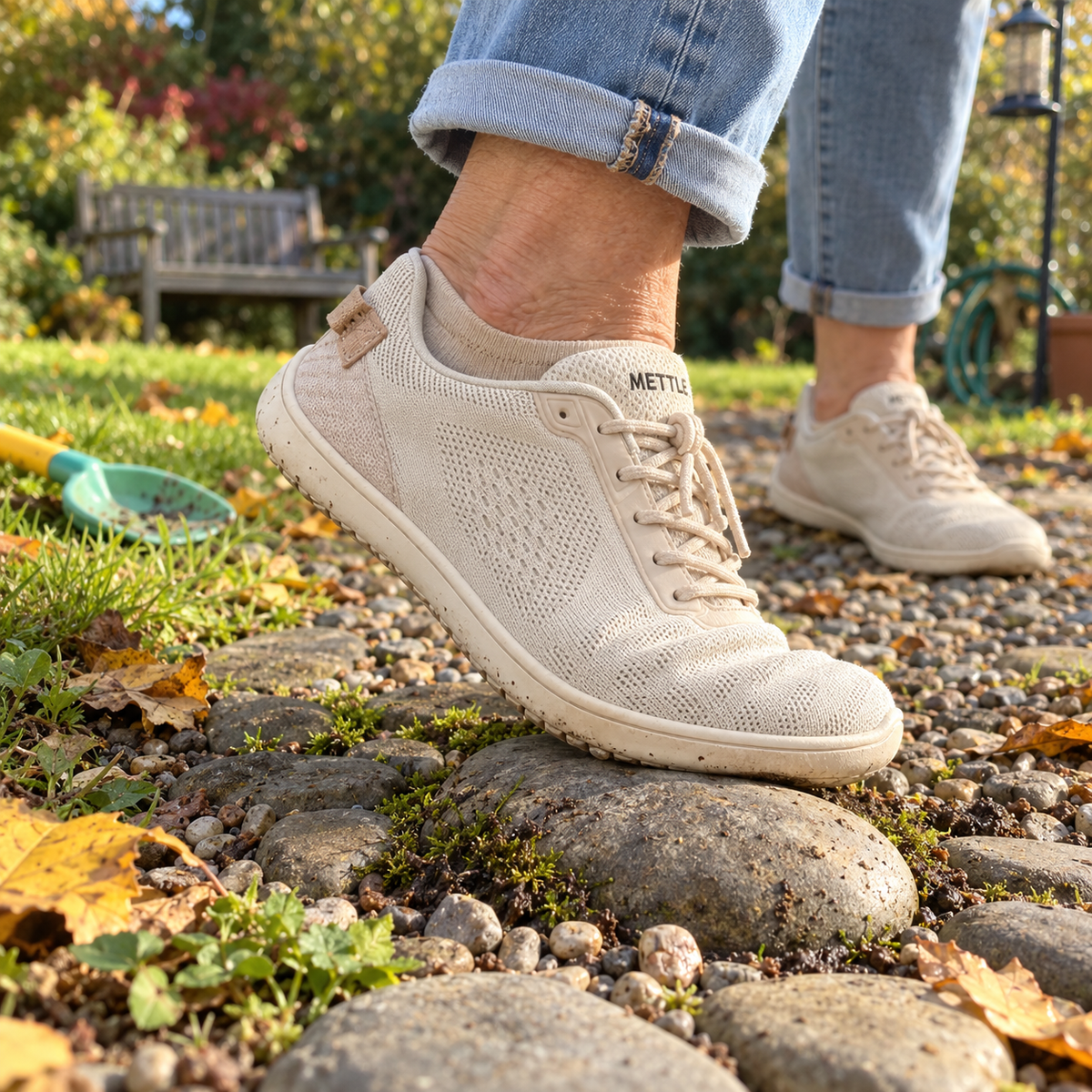
Your feet aren't just there to carry you. They're how your body reads the ground. Each sole has thousands of nerve endings sending up a steady stream of information: flat, sloped, loose, wet. A lot of staying upright happens without you ever deciding anything.
Put an inch of soft foam under that, and the signal doesn't stop. It just goes quiet. It's like trying to thread a needle in oven gloves. Your hands still work. They just can't feel what they're doing.
That's why so many people start looking down at their feet on the stairs, or slow right down on wet leaves, without knowing why.
The Relief Alpha has a thin, flexible sole, so the floor comes back: the edge of the step, the give of the lawn, the slight slope of the driveway.
"I was unsure at first — but they have truly reduced my pain levels, helps me walk so much easier, has helped my balance, and are oh so comfortable."
4. Your feet get their job back
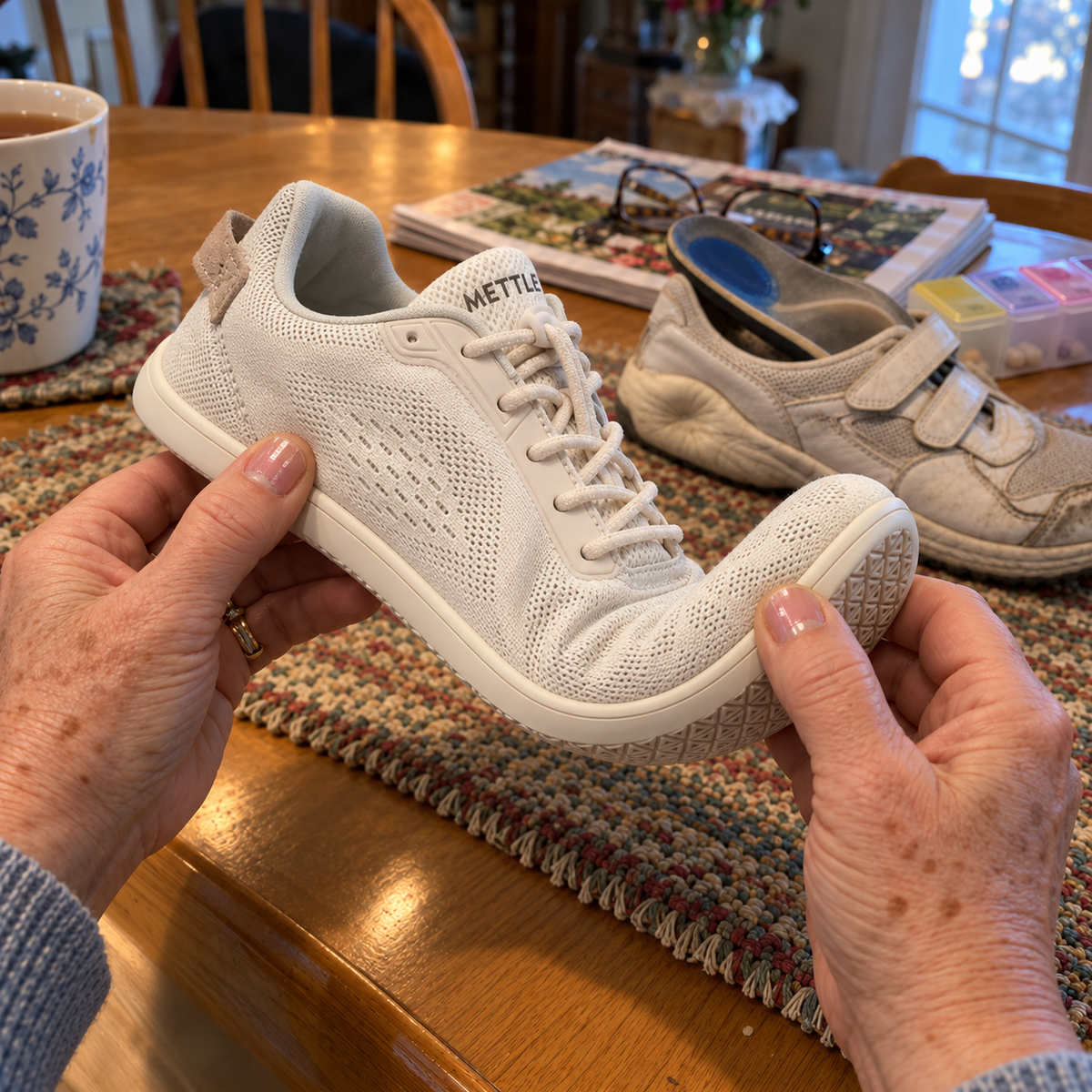
There's no built-in arch support. That sounds wrong at first, but your arch is held up by muscles, and muscles only get stronger when they're asked to work. Every step in the Relief Alpha asks a little.
The sole bends where your foot bends, so the arch can flex and spring back the way it was built to. And the heel sits level with the front of the foot (zero drop), so your weight spreads across the whole foot instead of piling onto the heel and the ball.
"I've had plantar fasciitis for years. I didn't think changing my shoes could do this much."
If you're managing heel spurs, plantar fasciitis or neuropathy and want a firmer arch for now, there's an optional Orthopedic Insole with a deeper heel cup.
"By restoring the foot's natural architecture, these shoes provide immediate relief to the joints. It's the first everyday shoe I confidently recommend."
5. You don't have to go "barefoot" overnight
By now the obvious thought is: so why not just go barefoot? Or buy the thinnest barefoot shoe out there?
Because feet that have spent decades in cushioning don't like being thrown in the deep end. Go from a thick foam sneaker to a paper-thin sole on Monday, walk your usual mile, and by Wednesday your calves feel like you ran a marathon. A lot of people try barefoot shoes exactly once, for exactly that reason.
Feet want to be walked back in, not thrown in.
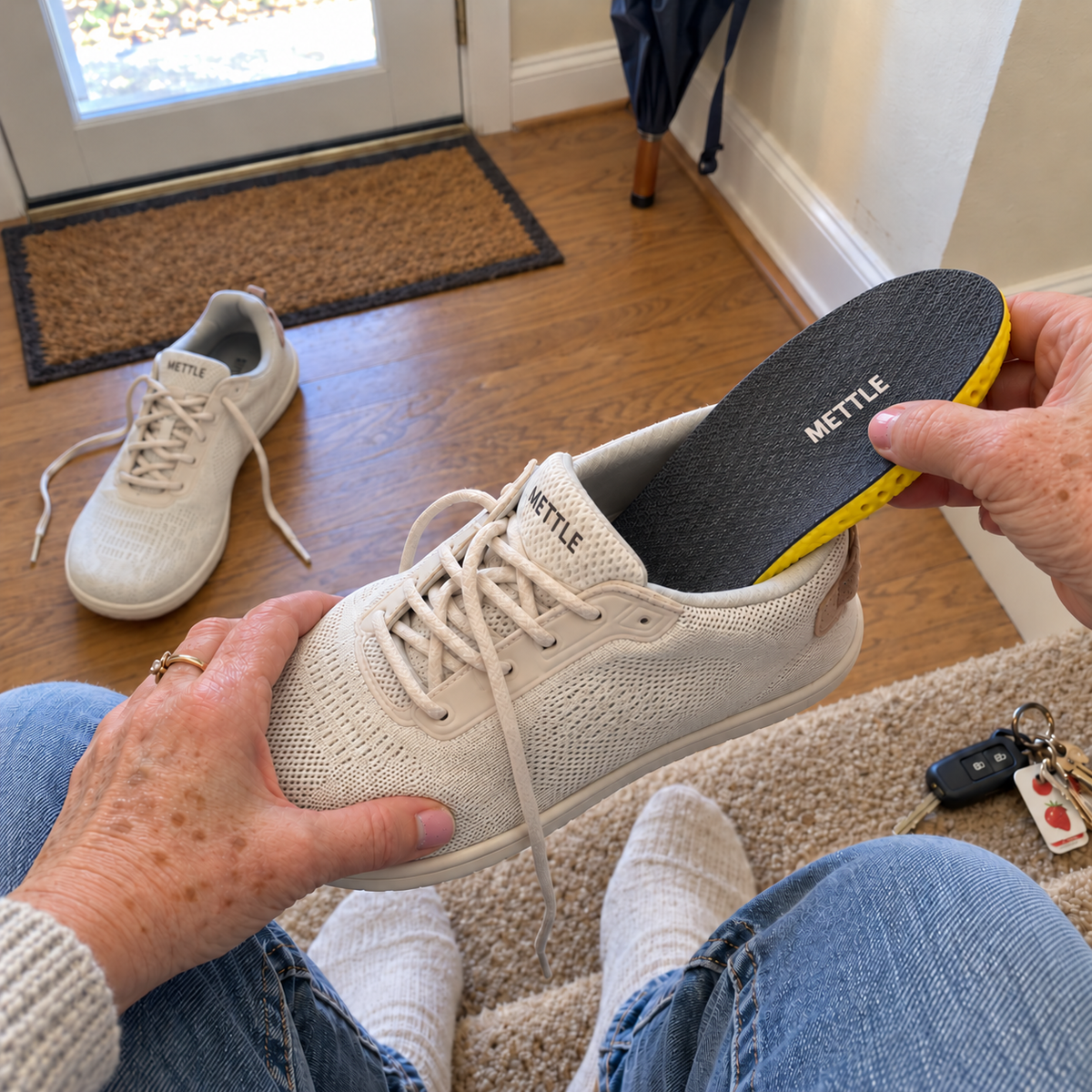
So every pair of Relief Alpha comes with a Transition Insole. It slips inside and gives you a little extra cushion while the muscles catch up. You start with 30 to 60 minutes a day, around the house or out to the mailbox, and build up over about four weeks. On a tired day, the insole goes back in. You set the pace.
Some calf tiredness in the first week is normal. It feels like the first day back in the garden in spring: used, not hurt.
James learned the pace the honest way:
"As a 60-year-old with stiff knees, these have been a game-changer — but transition slowly. I walked too far on day one and my calves paid for it."
6. People notice it further up than their feet
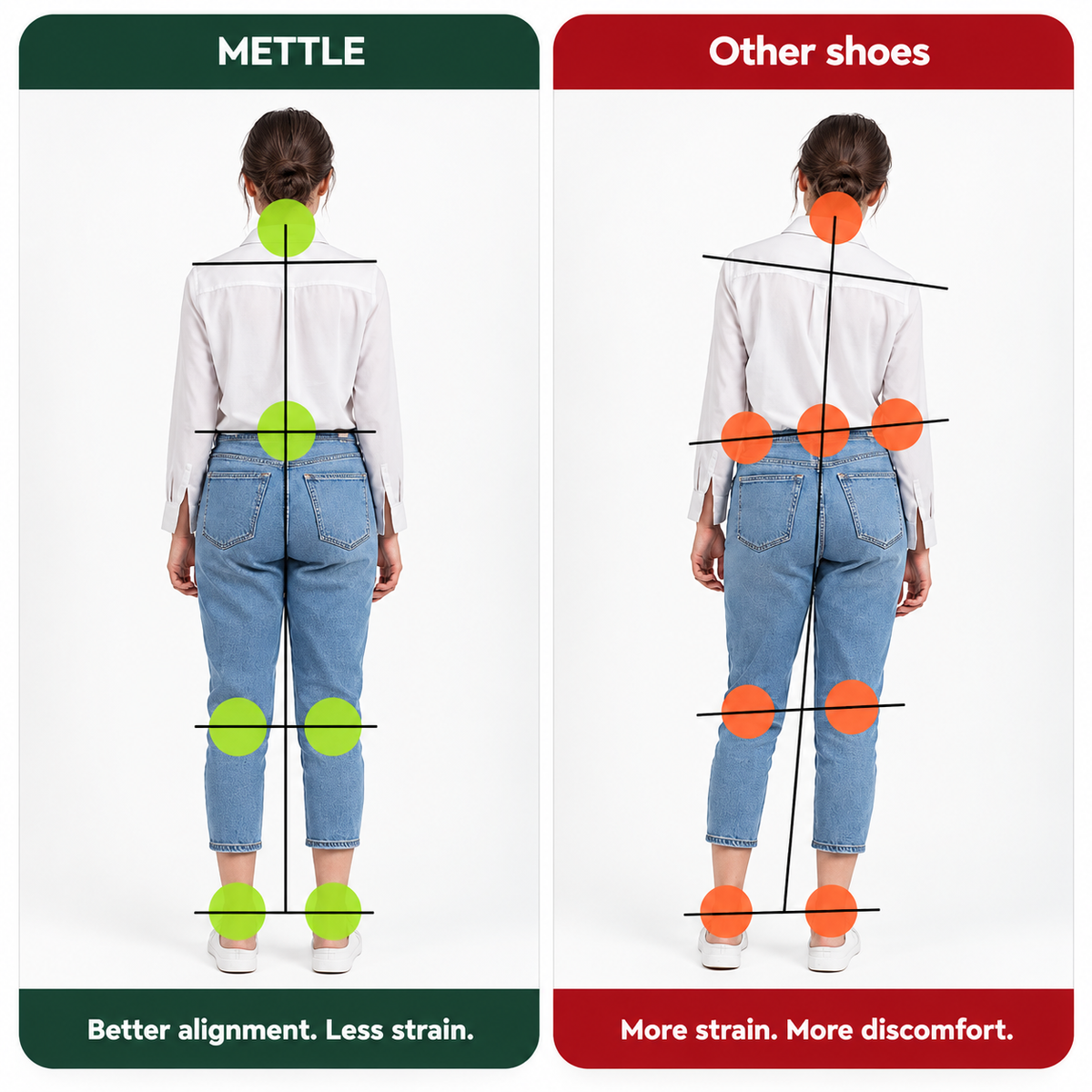
Your feet are the bottom of the chain. When they can't move the way they're built to, your ankles, knees, hips and lower back pick up the slack.
We hear this one a lot, and it's usually a surprise to the person telling us:
"At first they felt a bit weird to walk in. After 3 weeks my feet got used to the thin sole — my back pain has reduced a lot."
"First hike where my knees didn't ache the next morning. Took about ten days to get used to, then it just clicked."
We won't promise that for everyone. Bodies differ, and joint pain has plenty of causes. But it's why so many people say they bought these for their feet and kept wearing them for everything else.
7. Nobody will know they're "good for you"
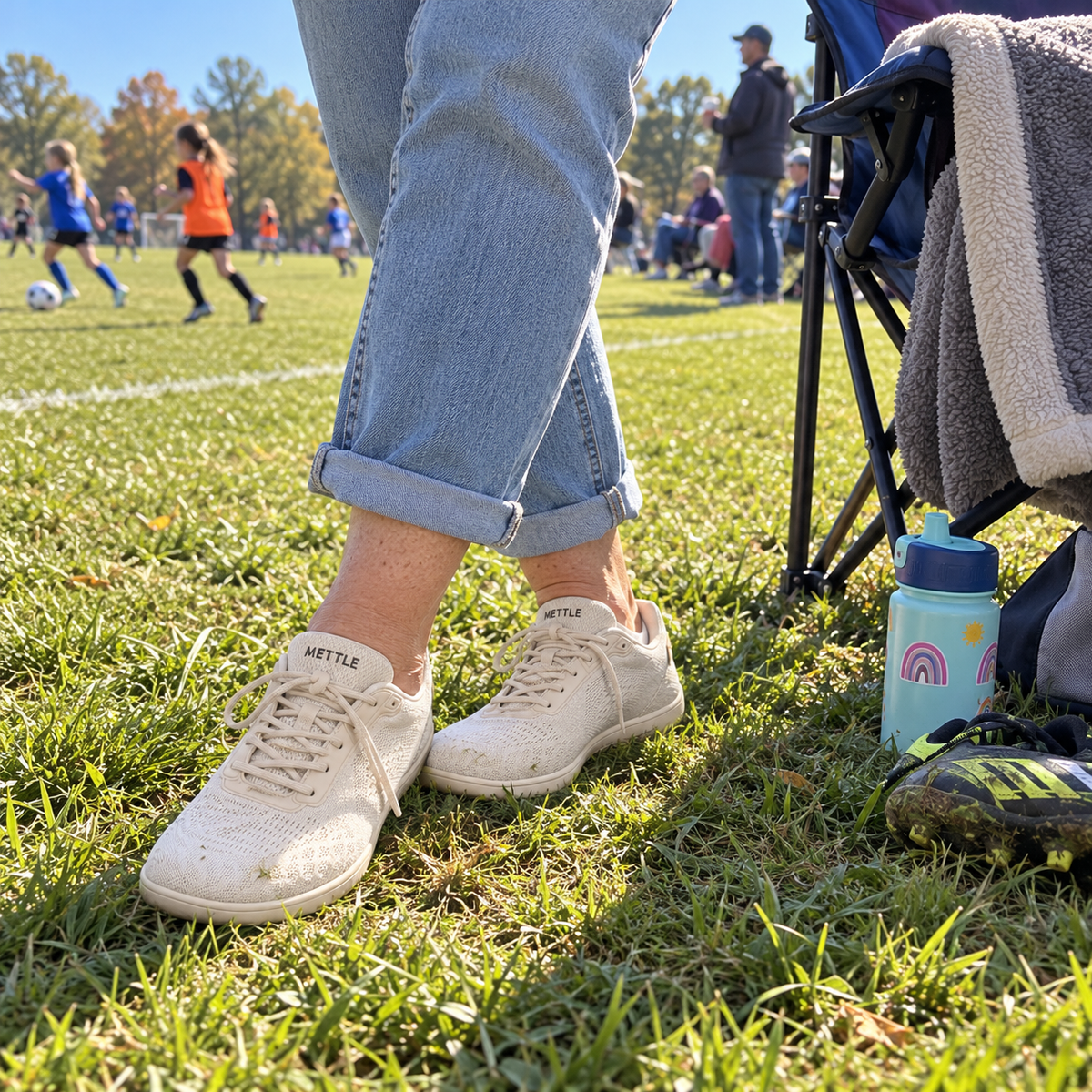
No chunky orthopedic sole. No "comfort shoe" look that adds ten years the second you lace up.
The Relief Alpha is a light knit sneaker in Sahara Sand or Phantom Black, in men's and women's sizes. It goes with jeans, with a summer dress, to the grandkids' soccer game and to lunch afterwards. There's nothing stiff to break in, so most people stop thinking about them by mid-morning.
"Incredible shoes, I use them every day and have a pair for both indoors and outdoors."
8. You get 100 days to make up your mind
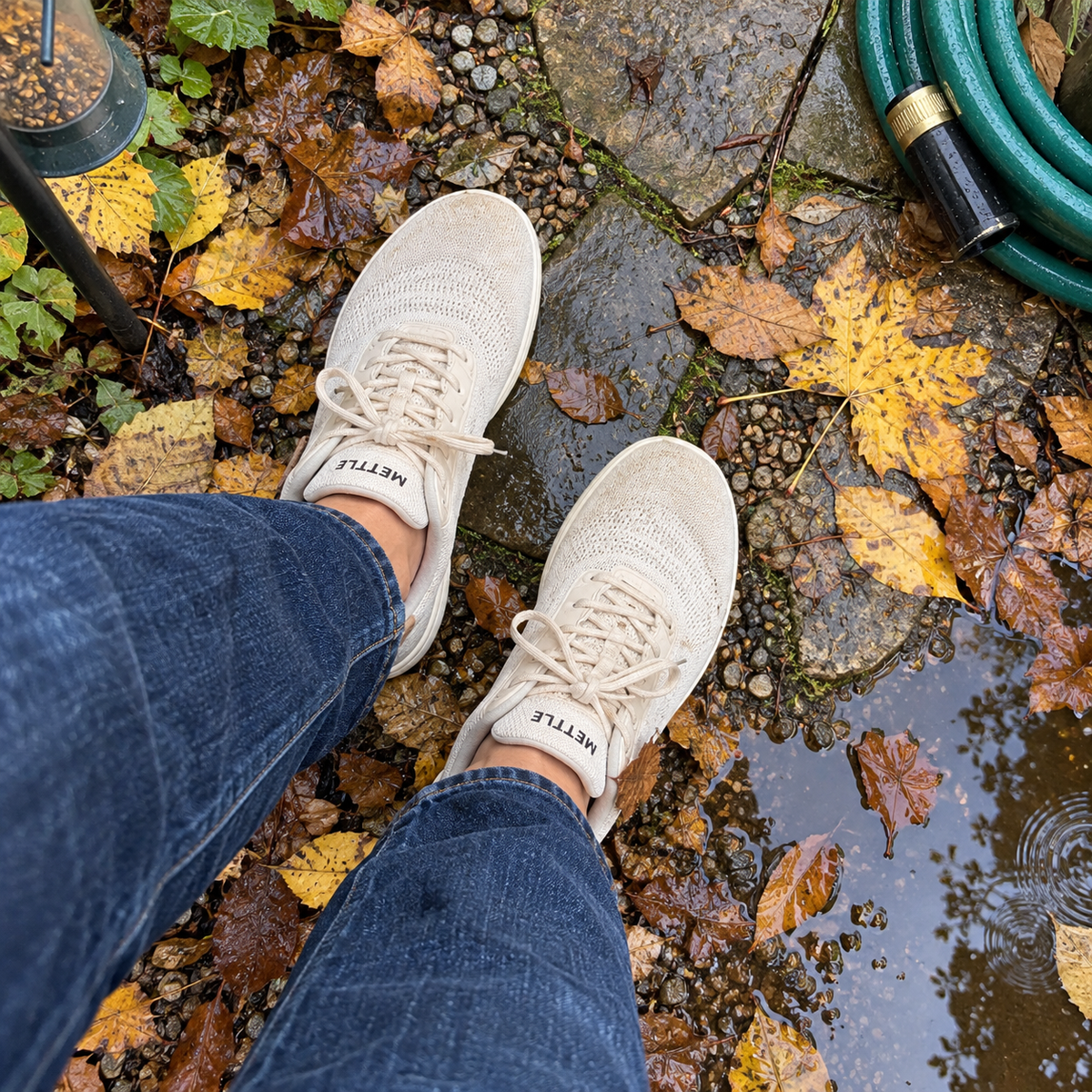
Most shoe brands give you 30 days. That's barely long enough to finish the transition, let alone know what a shoe is doing for you.
Mettle gives you 100. Wear them on the stairs, on the gravel path, on the rainy days and the long shopping days. If they're not right, send them back. Wrong size? Exchanges are free.
9. They cost less than the pair already sitting in your closet
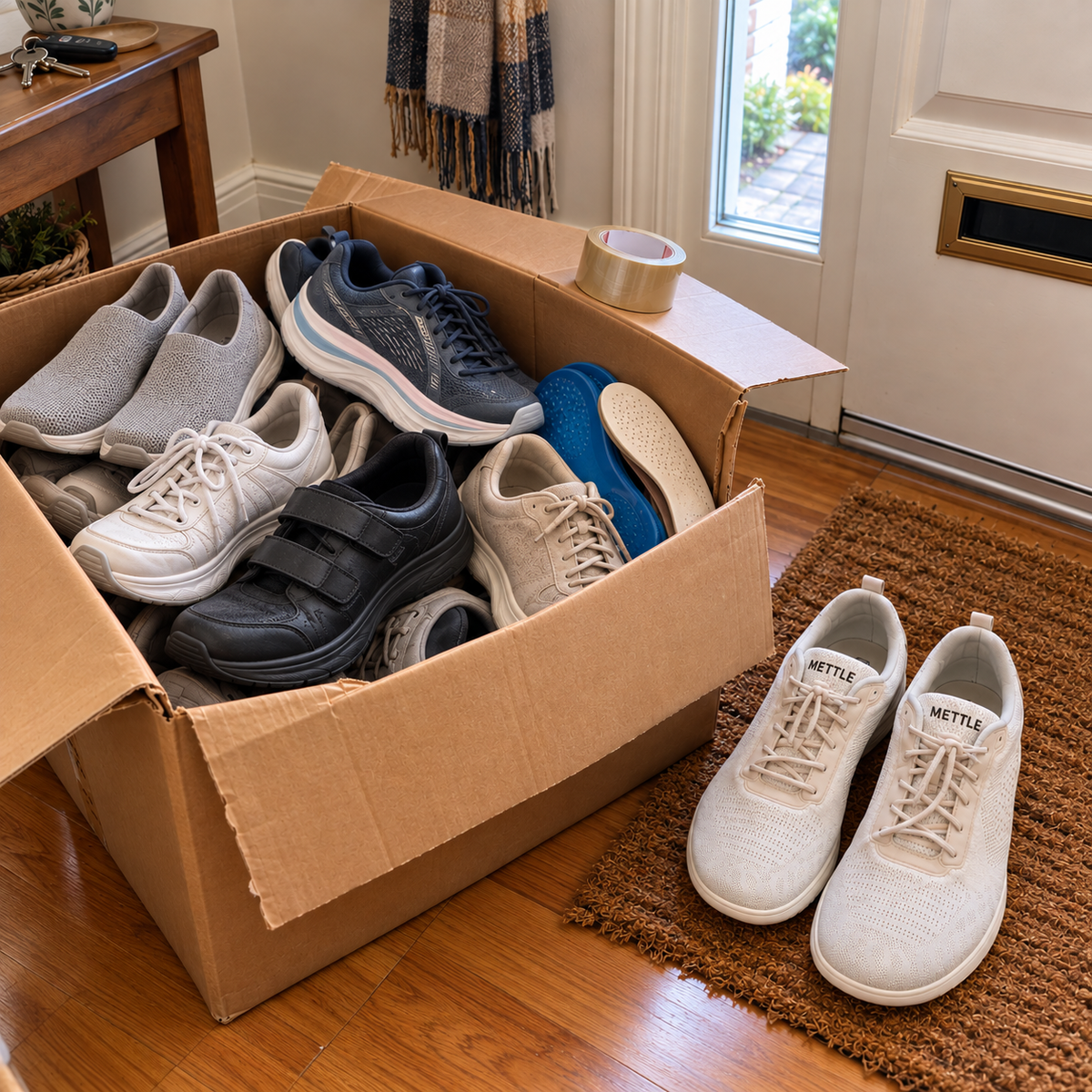
Add up the soft-shoe years. The "orthopedic" pair. The insoles. The memory-foam pair, and then the second memory-foam pair.
One pair of Relief Alpha is $69.95, down from $140. Most people take two or three: one for the house, one for outside, often one for a husband, wife or friend. At three pairs it's $48.96 a pair, Transition Insoles included.
That's less than half of what most people paid for the orthopedic pair they don't wear anymore.
Before you order: who these aren't for
We'd rather lose a sale than have someone rush this.
- If you want to feel completely different by the weekend, these aren't it. Feet that have spent years in foam take a few weeks to wake up.
- If you have an open sore, a wound that's slow to heal, or a foot your doctor is watching, talk to your podiatrist first. A shoe isn't wound care.
- If you've had a recent fall or a sudden change in your balance, see your doctor before you change anything. And if you've been told to use a cane or walker, keep using it.
- If you'll pull the Transition Insoles out on day one because thin sounds better, please don't. That's how sore calves happen.
Still here?
Then here's what we can tell you: 92% of customers reported less foot pain after two weeks. And most of the reviews read a lot like Lydia's:
"I honestly didn't expect much, I've tried so many shoes over the years. My feet used to ache by the afternoon, and now I barely think about them at all. Last weekend I walked the whole coastal path with my daughter, first time in years."
If you've got a closet full of shoes that each helped for a week, and you're willing to go one step at a time, these were made for you.
Quick questions
Won't a thin sole hurt? Not if you start with the Transition Insole in and build up from 30–60 minutes a day over about four weeks. Some calf tiredness in week one is normal.
I have neuropathy / bunions / plantar fasciitis. Are these for me? They're designed with a wide toe box, a soft non-binding upper and a seamless interior, and there's an optional Orthopedic Insole for a firmer arch. If a doctor is monitoring your feet, check with them first.
How long does delivery take? Orders ship within 24 hours on business days. Delivery usually takes 6–10 business days, with tracking by email.
What if they're not right? You have 100 days. Returns and size exchanges are free.
Your feet did the work for a long time before a shoe took it over. This just gives it back, a step at a time.